


Summarize this blog post with:


In this article, you’ll get a head-to-head between Ahrefs and Moz Pro in 2026, the real pricing math behind both, a 5-question decision framework that picks one in 30 seconds, and an honest look at the work neither tool was built to do. Many comparisons end with “it depends” and leave you where you started. This one tells you which to pay for, when to pay for both, and the layer that sits on top of either to keep your SEO and AI search work moving in the same direction.
Table of Contents
Short answer by user type
|
You are |
Pick |
|---|---|
|
A solo blogger or small business owner with 1 to 2 sites in English markets |
Moz Pro Standard at $99/mo |
|
An SEO specialist or agency lead with 3+ clients, multi-country work, or daily rank tracking at scale |
Ahrefs Lite or Standard at $129 to $249/mo |
|
A content marketer who runs SEO and now needs AI search coverage, content workflows, and automation |
Analyze AI Growth or Pro from $99/mo |
|
A team that needs all three (deep backlink data, DA for outreach, and AI search coverage) |
Combine. Realistic stack below. |
If both rows fit you, the framework below picks the winner.
How Ahrefs and Moz actually differ in 2026
Both started as backlink tools. Fifteen years later they serve very different users. Ahrefs went deep on raw data and crawl scale. Moz went wide on community, the Domain Authority metric, and an interface a beginner can survive on day one.
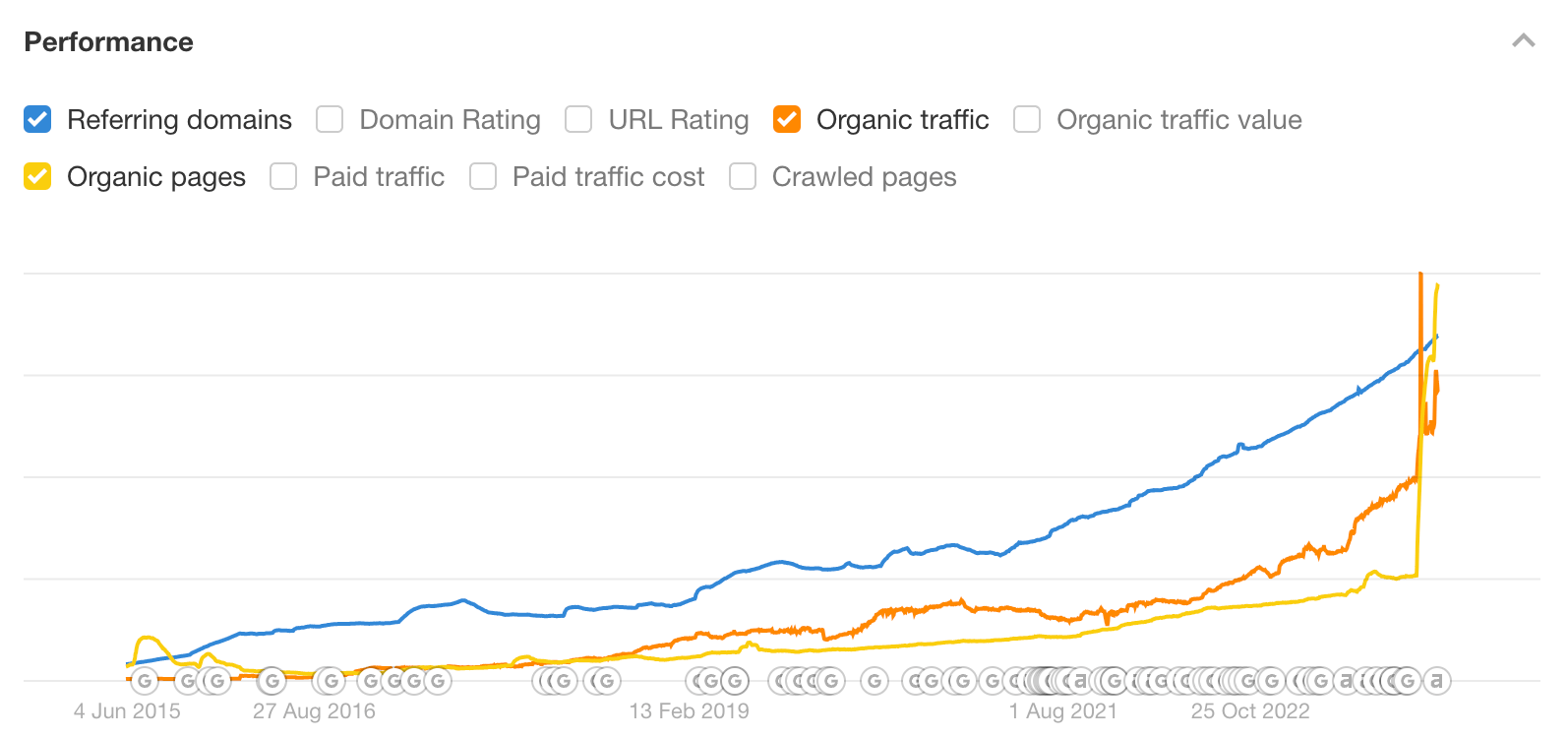
The scale gap matters. AhrefsBot runs the second-most active SEO crawler after Google, hitting roughly 8 billion pages a day. Ahrefs reports more than 35 trillion backlinks and refreshes link data every 15 minutes. Moz’s Link Explorer reports around 45 billion root domains worth of links with thinner deep coverage and slower refresh.
The keyword database tells the same story. Ahrefs tracks 28 billion keywords across 200+ countries. Moz tracks around 500 million with stronger US coverage and lighter density everywhere else. For international work in Spanish, Japanese, German, or Portuguese, Ahrefs has the data.
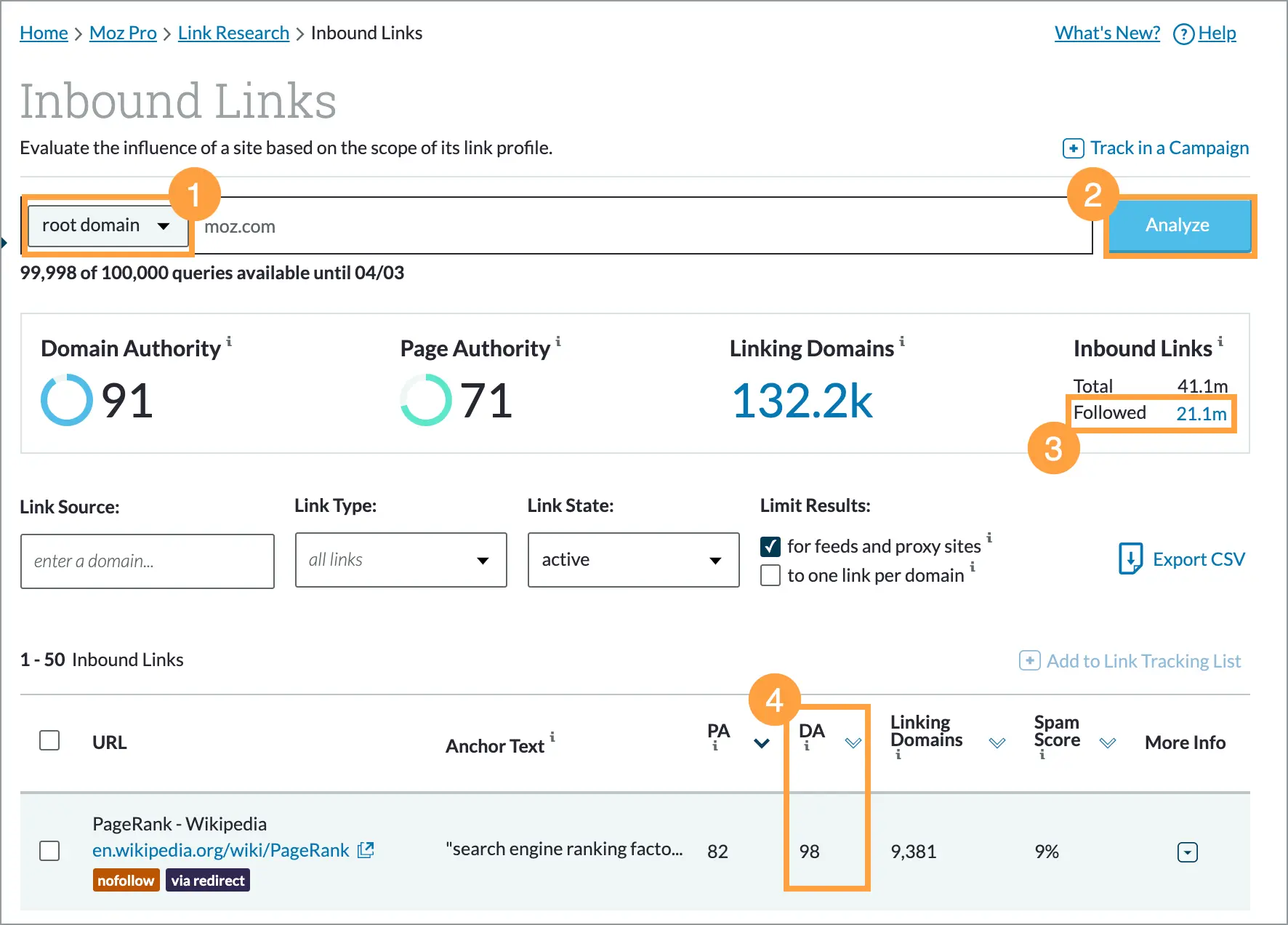
Where Moz wins is Domain Authority. DA lives in every outreach email, every guest post requirement, and every “what’s your DA?” question on a sales call. Ahrefs has Domain Rating, which is similar but not interchangeable in casual usage. If you do link building or PR, you still need Moz or the free MozBar to check the number people ask for. Moz is also usable on day one. Ahrefs takes a week before you stop bouncing off menus.
Pricing reality in 2026
Both tools raised prices in 2024 and held them. Here is what you actually pay this year.
Ahrefs pricing
|
Plan |
Monthly |
Annual (per month) |
Sites |
Tracked keywords |
|---|---|---|---|---|
|
Starter |
$29 |
not on annual |
1 |
None |
|
Lite |
$129 |
$108 |
5 |
750 |
|
Standard |
$249 |
$208 |
20 |
2,000 |
|
Advanced |
$449 |
$374 |
50 |
5,000 |
|
Enterprise |
from $1,499 |
annual only |
100 |
10,000 |
Two things to know. Lite and Standard use a credit system. Heavy use burns through credits and overages get auto-billed. And Brand Radar (the AI mentions tracker) sits outside the core subscription as a $199/mo add-on per AI index. A team that wants Standard plus AI tracking is realistically looking at $448/mo before pulling any deep data.
Moz Pro pricing
|
Plan |
Monthly |
Annual (per month) |
Sites |
Tracked keywords |
|---|---|---|---|---|
|
Starter |
$49 |
$39 |
1 |
50 |
|
Standard |
$99 |
$79 |
3 |
300 |
|
Medium |
$179 |
$143 |
10 |
1,500 |
|
Large |
$299 |
$239 |
25 |
3,000 |
Moz does not run a credit system. The number on the page is the number on the invoice, and Standard includes a 30-day free trial. Ahrefs no longer offers a real free trial. The closest equivalent is the $29/mo Starter plan.
The honest read. For one site in English markets, Moz Standard at $79/mo annual beats Ahrefs Lite at $108/mo annual and covers most of what a small operation needs. For three or more sites, or any international work, Ahrefs Standard pays back the gap quickly.
Keyword research
Keyword research is still the first move of any SEO program. Both tools handle it differently.
How it works in Ahrefs
Open Keywords Explorer, paste in a seed term, pick a country, and the report fans out into volume, difficulty, traffic potential, parent topic, and a SERP overlay showing the live top 10.
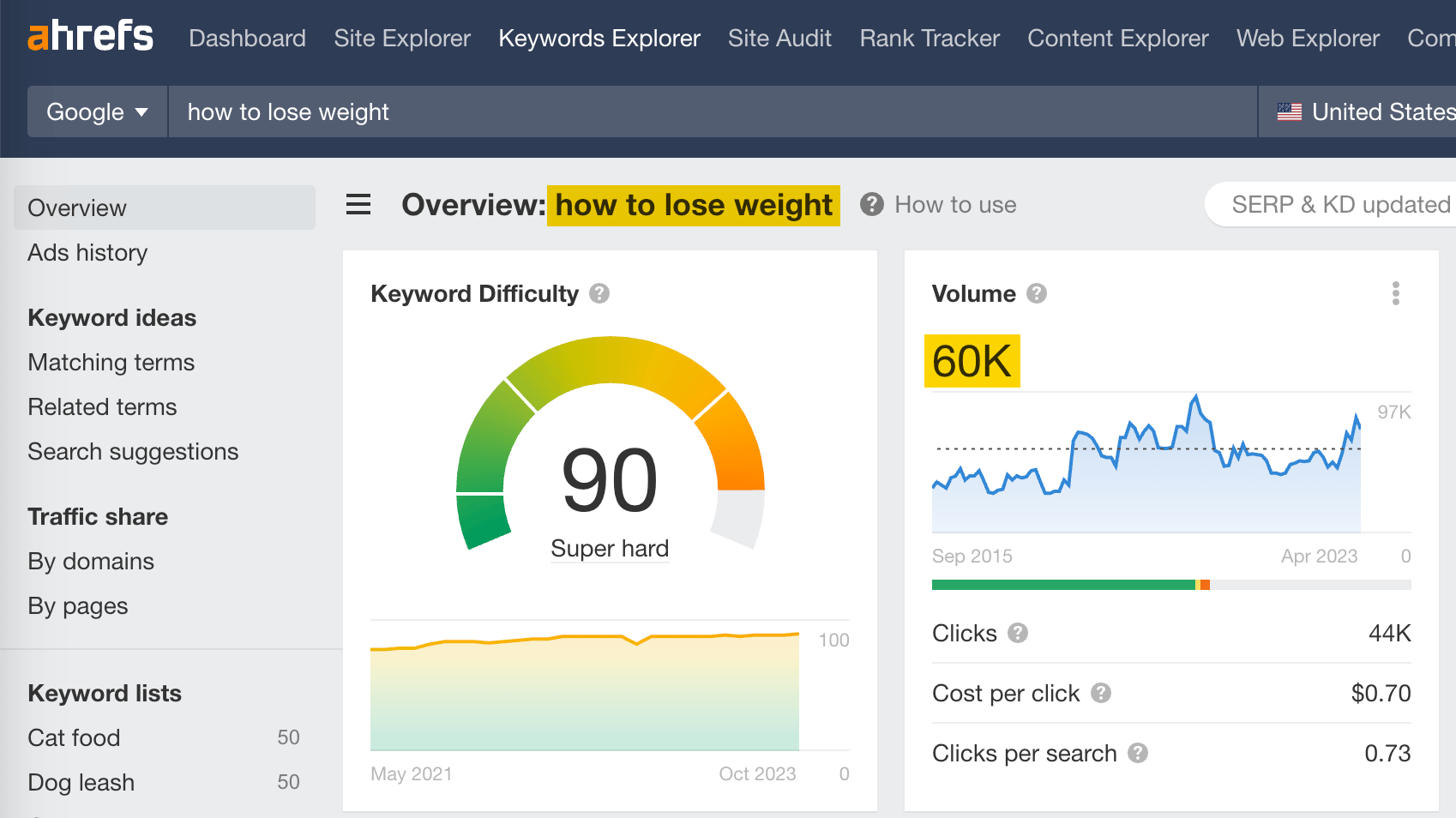
The depth is in the modifiers. “Matching terms” gives every phrase containing the keyword, “Questions” surfaces natural-language queries, and “Related terms” pulls semantically connected concepts. Parent Topic shows the broader keyword a page should actually target.
For a no-budget version, the 12 best free keyword research tools in 2026 covers the alternatives, and the keyword generator tool plus keyword difficulty checker validate a list before you commit to any platform.
How it works in Moz
Moz’s Keyword Explorer is calmer. You get volume, a difficulty score, an organic CTR estimate, and a Priority metric that fuses volume, difficulty, and click potential into a single number a beginner can act on.
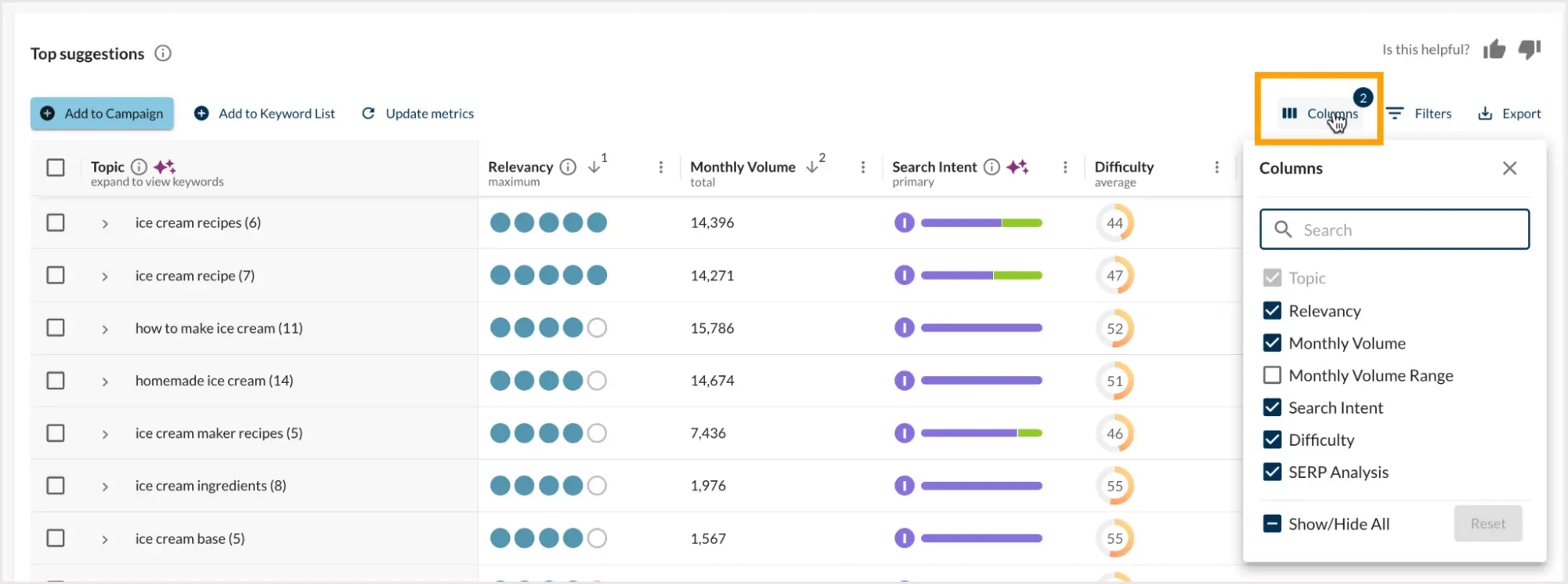
For US sites in non-technical niches, Moz is faster to a decision. The data is shallower outside English markets, but the interface tells you what to do next without making you read a paragraph first.
Where AI search changes the work
A keyword tool answers one question. What are people typing into Google? In 2026 that is half of it. Buyers also ask ChatGPT, Perplexity, Gemini, Copilot, and Claude in natural language, and those prompts do not show up in any keyword database.
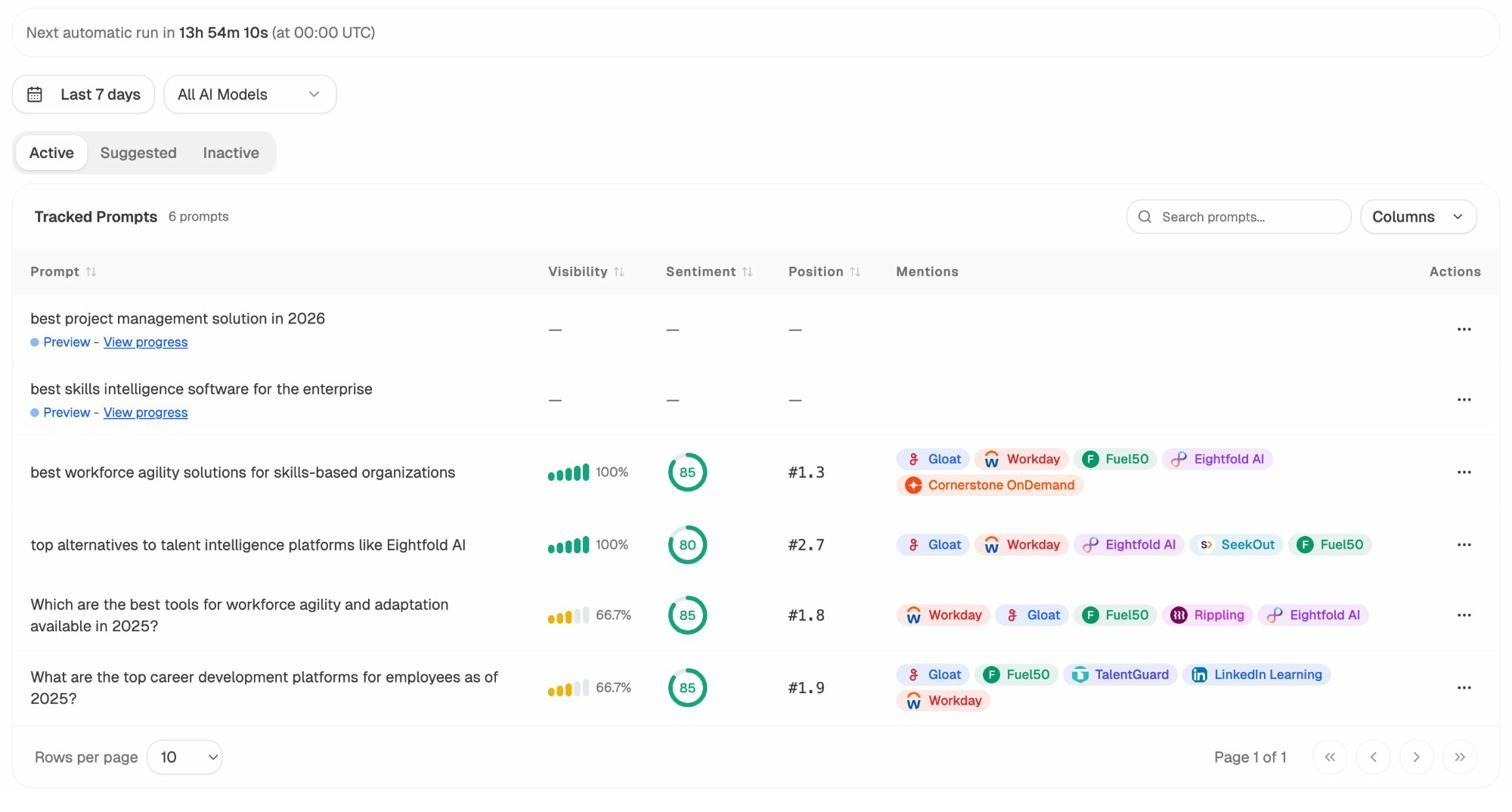
This is the work neither Ahrefs nor Moz was built for. Inside Analyze AI, Prompt Discovery pulls real prompts your buyers run against AI models in your category, suggests new ones based on competitors, and lets you track the ones that matter.
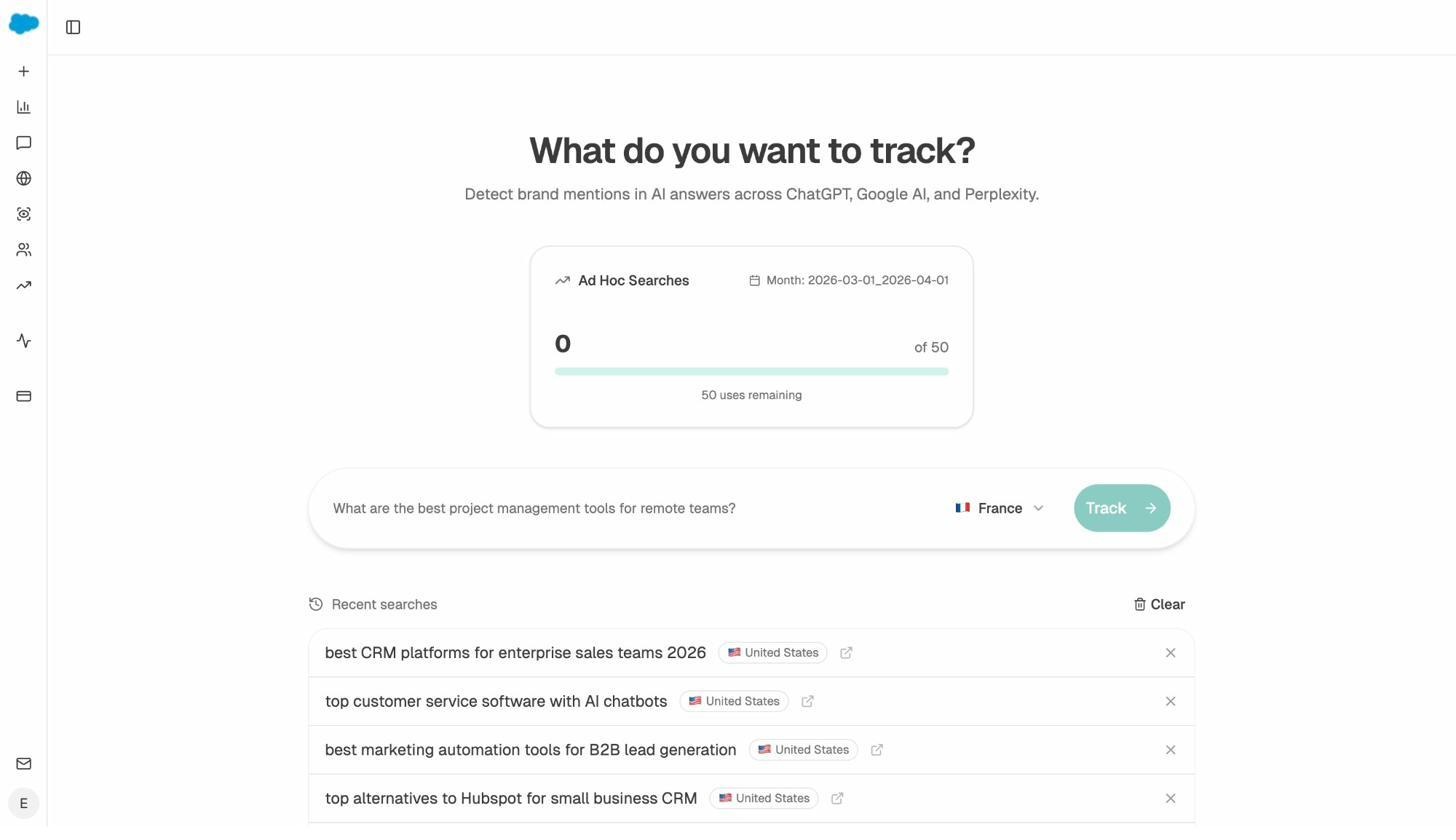
The AI Search Explorer runs on-demand prompts so you see how AI engines answer a specific question right now, who they cite, and how your brand is framed.
Backlink analysis and link building
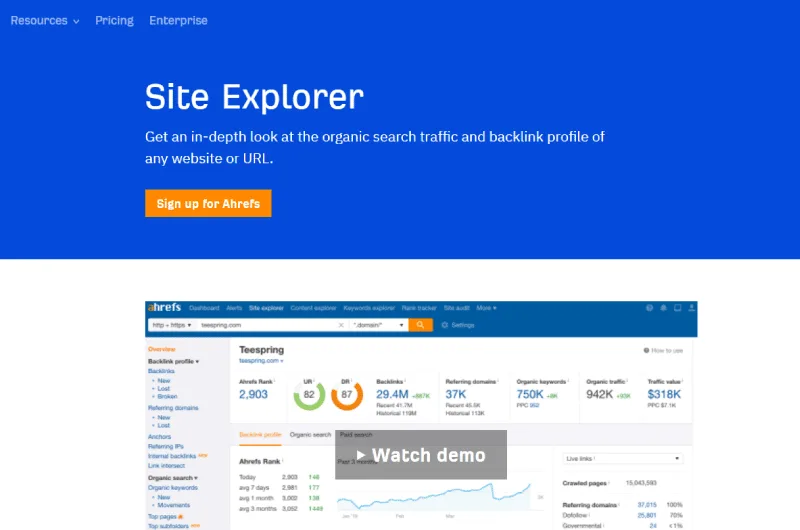
Ahrefs wins on raw backlink data. The index is larger, the refresh is faster, and Site Explorer surfaces referring domains, anchor text distribution, and broken-link opportunities with a depth Moz cannot match.
Moz wins on metric recognition. DA is the currency of guest post pitches. Moz also includes a Spam Score that flags toxic links cleanly. For SEOs whose link work is mostly outreach in English markets, Moz at $79/mo annual is enough.
If you are starting out, the guide on how to get backlinks covers the four methods that move the needle, and the broken link building workflow walks through the play Ahrefs supports best. The broken link checker and website authority checker cover the basics for free.
What both tools miss on the citation side
Backlinks were the citation graph of the Google era. AI citations are the citation graph of the ChatGPT era. They overlap but are not the same list. ChatGPT, Perplexity, Gemini, and Claude rank their own sources when they answer, and those sources determine which brands get named.
Citation Analytics tracks every URL that AI models cite when answering prompts in your category, the share that go to your domain versus competitors, and the content types AI engines pull from.
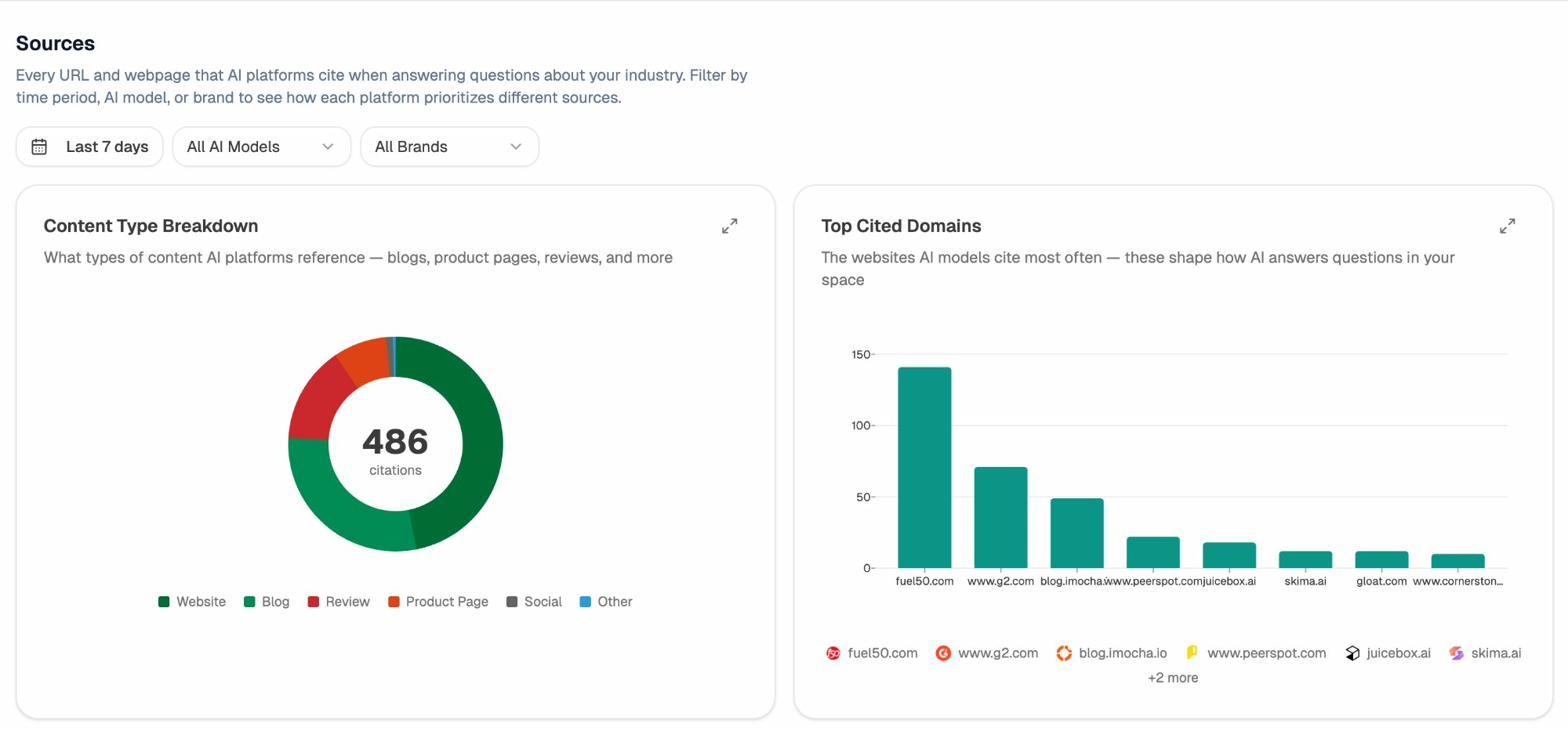
You can also see which of your pages get cited often (your “citation magnets”) and which quietly lose citations even when traffic looks fine. Neither Ahrefs nor Moz tracks this layer.
Rank tracking
Both tools track Google rankings. Ahrefs is daily by default on every paid plan, runs across 200+ countries, and stores SERP history back to 2015. Moz tracks weekly on lower tiers and daily on higher plans, with strong local pack tracking through the separately-sold Moz Local product.
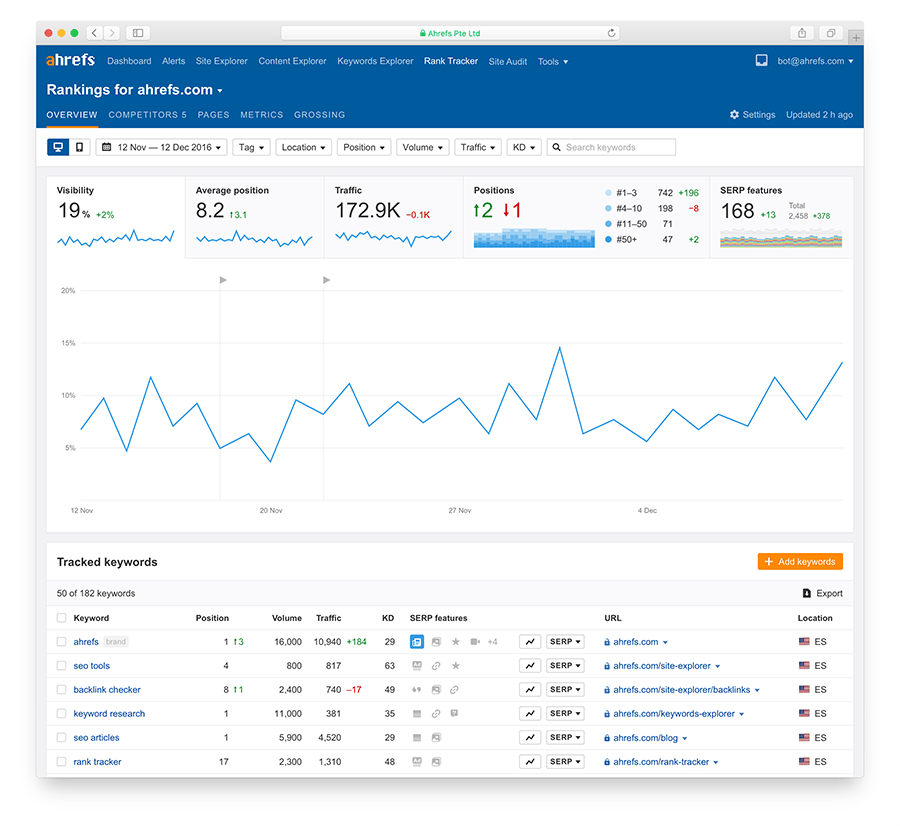
For US small businesses, Moz Local is a real advantage. Ahrefs has no comparable local listings product.
Rank tracking in the AI search layer
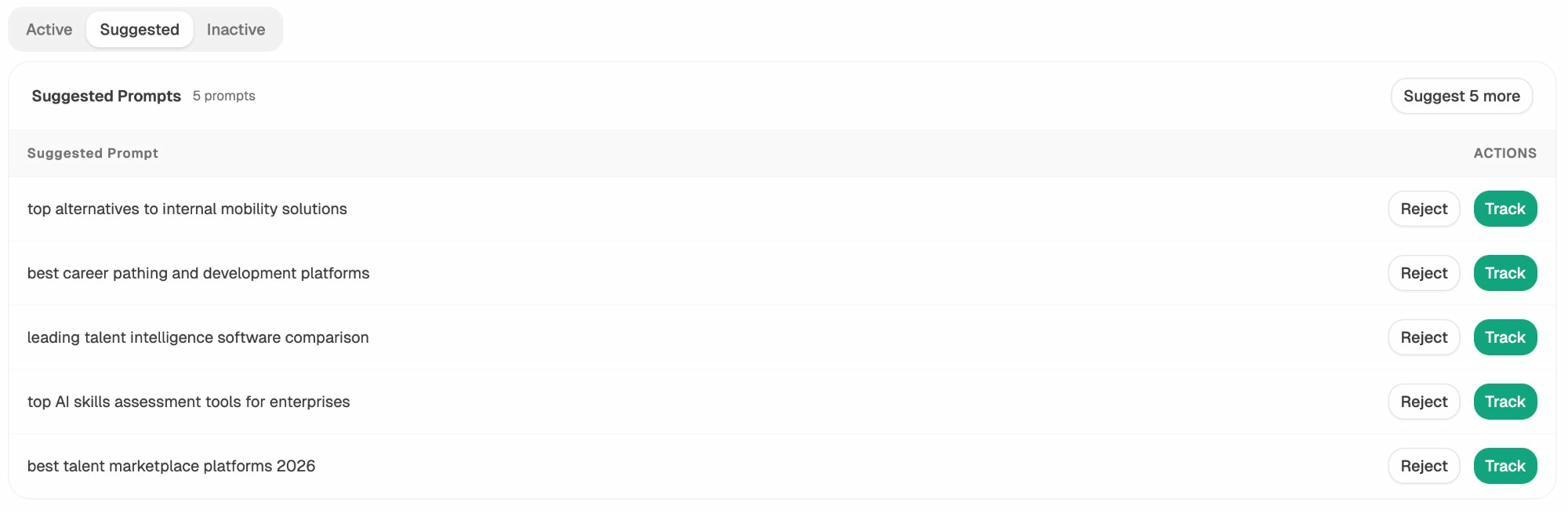
Ranking #3 on Google and never being mentioned by ChatGPT is a 2026 problem neither tool measures. Prompt Tracking runs daily checks on the prompts that matter to your business, alerting you to visibility drops, sentiment swings, and competitor moves the same week they happen.
AI Traffic Analytics connects to your GA4 property and tells you which AI engines drove visitors, which landing pages they hit, and which sessions converted. Ranking and revenue sit in the same dashboard.
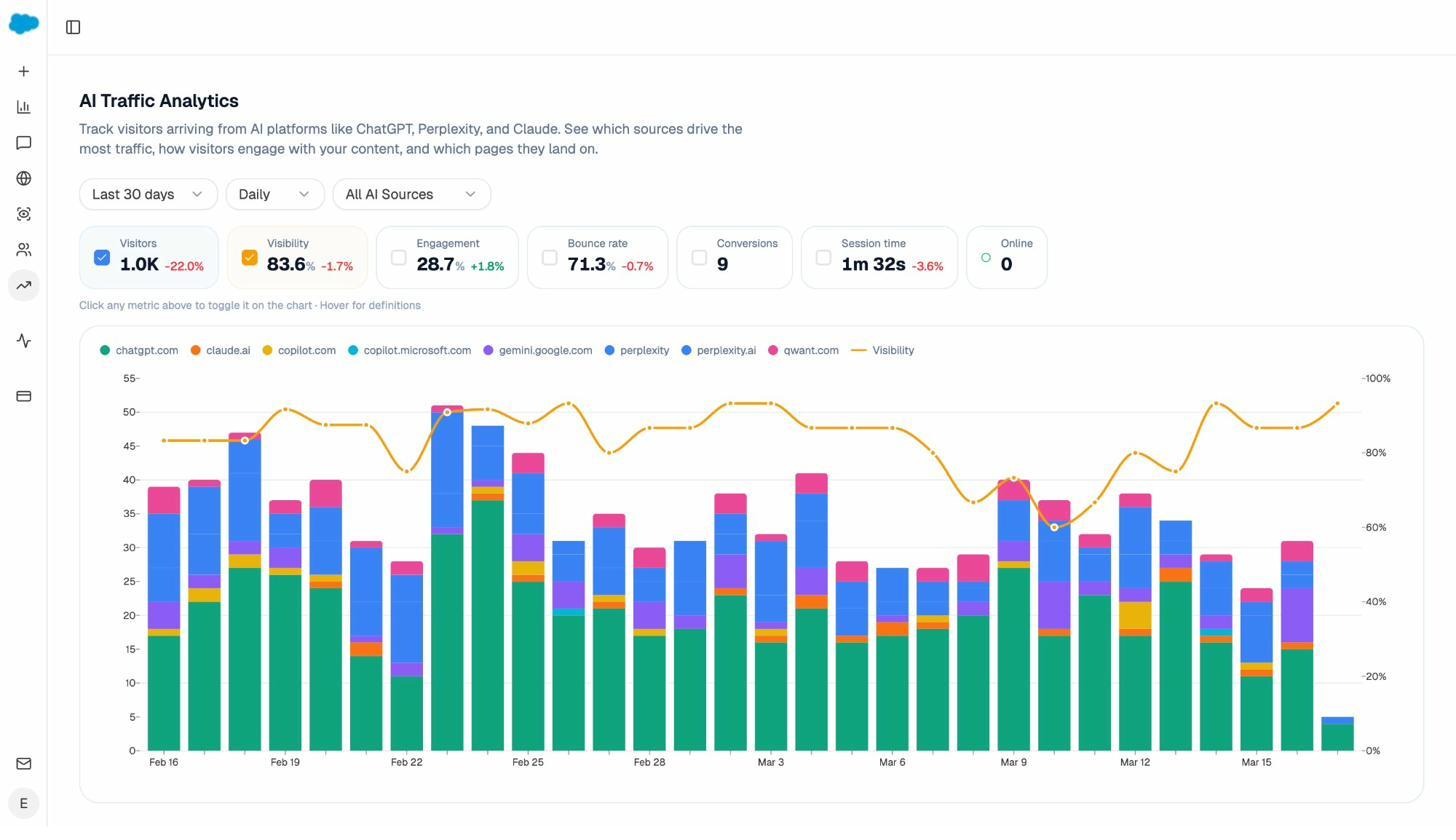
The Landing Pages report inside AI Traffic Analytics shows exactly which of your pages AI engines send traffic to. Double down on those patterns and the AI channel compounds the way SEO does.
Site audit and content optimization
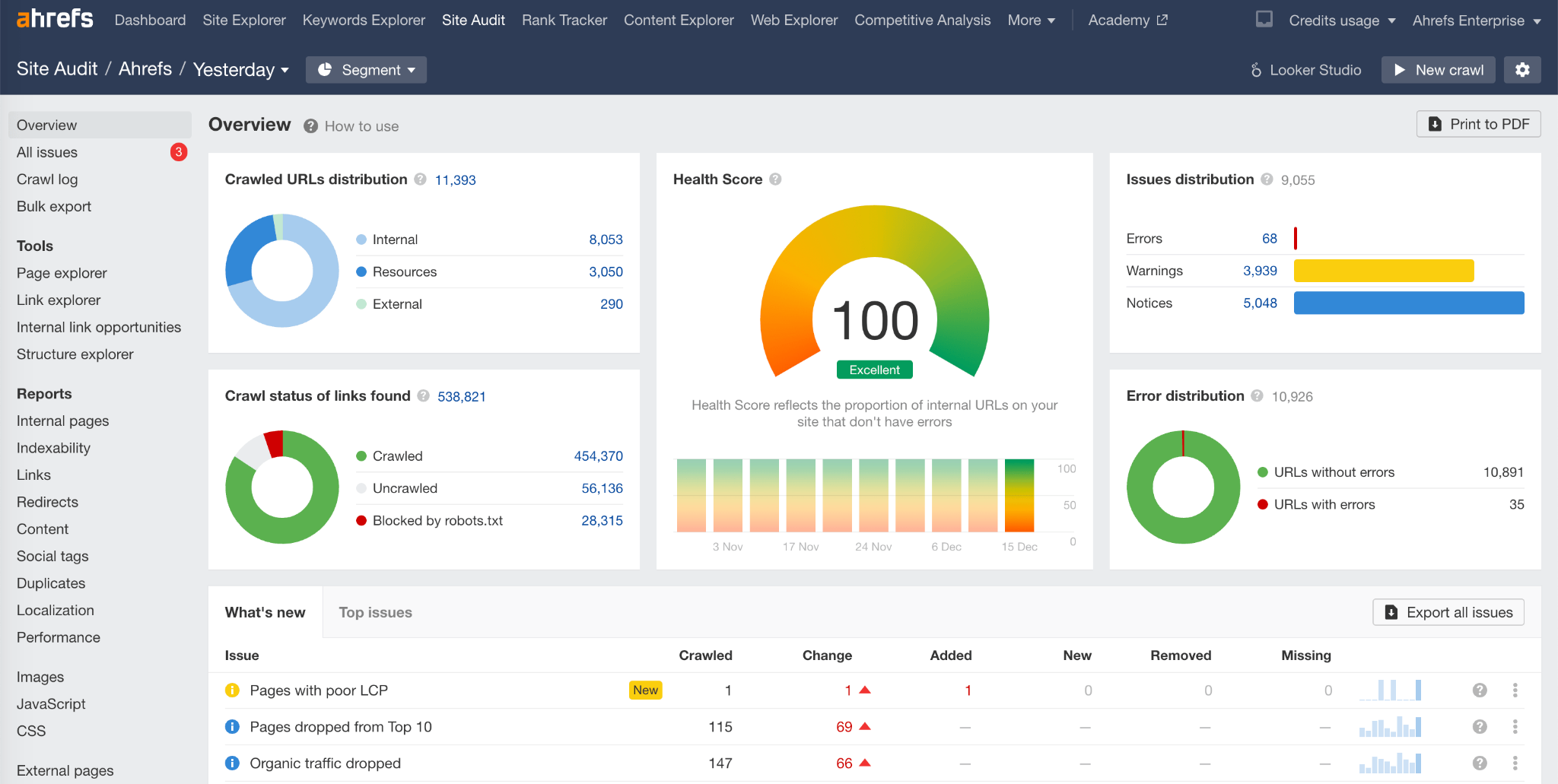
Ahrefs Site Audit crawls up to 2.5M pages a month, flags 140+ issues, and links findings back to keyword and backlink data so you can prioritize technical fixes by traffic at risk. Moz Site Crawl is friendlier, runs automated weekly crawls, and reports fewer checks more clearly.
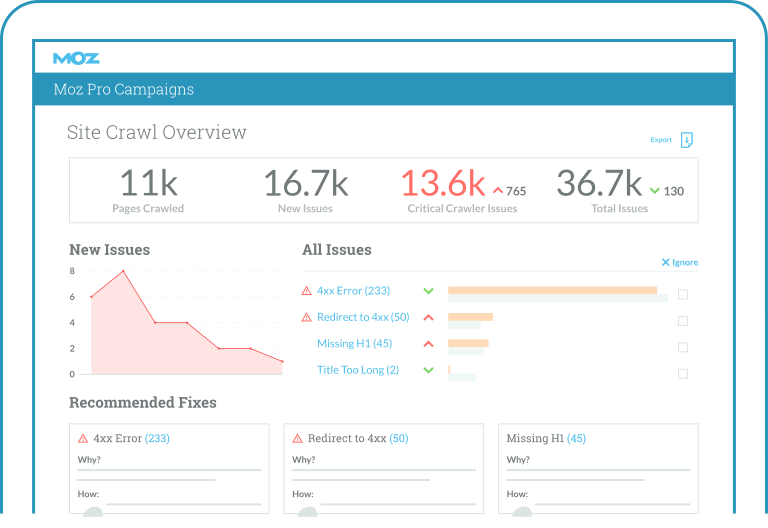
Both miss content optimization at the level a writer needs. Ahrefs gives you a content gap. Moz gives you Page Optimization scores. Neither rewrites the page or checks whether the rewrite holds up in front of AI engines.
How Analyze AI handles the rewrite
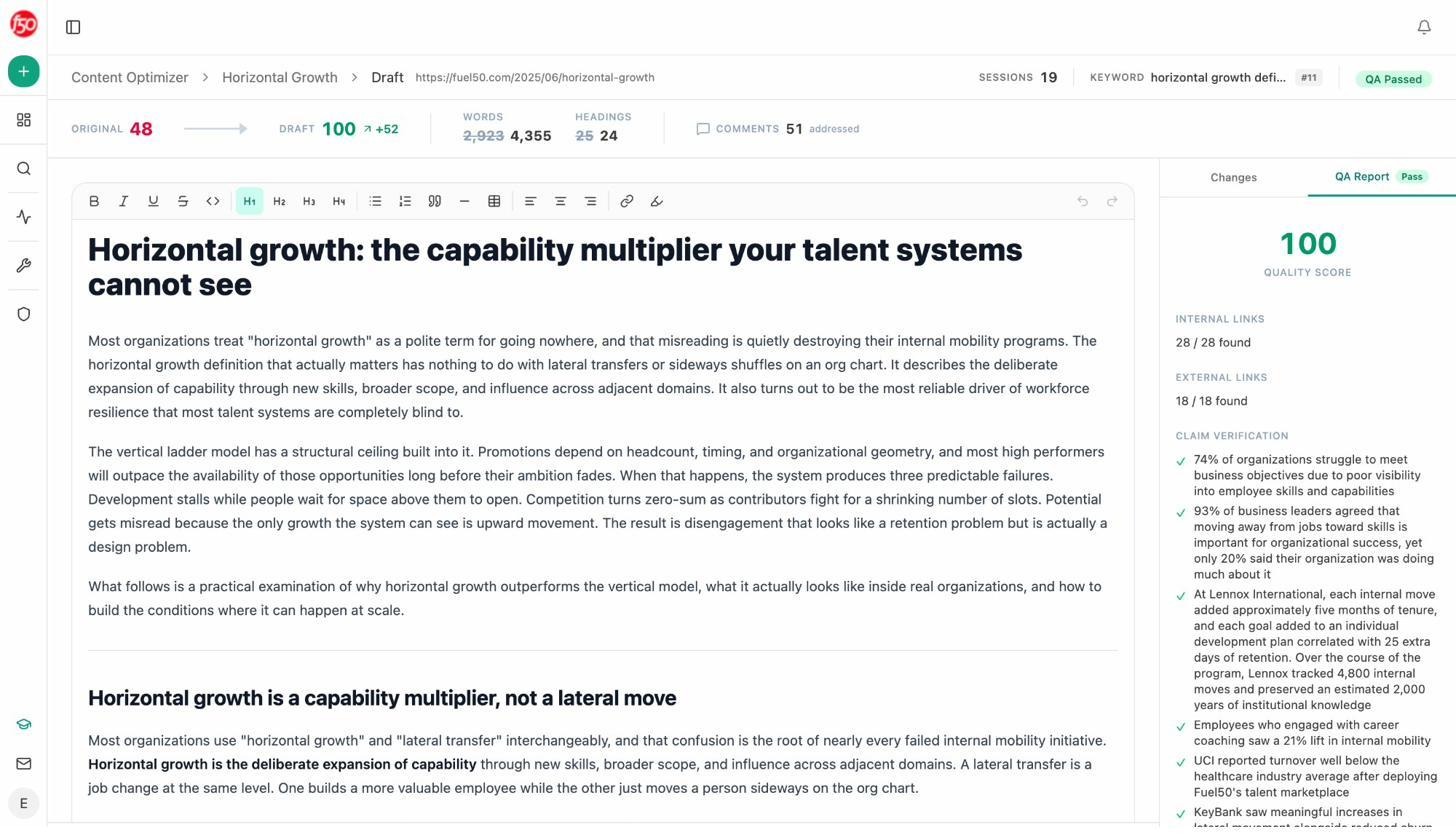
Content Optimizer takes a declining URL, audits it against the prompts your buyers run against AI models, and produces a rewrite that addresses the gaps. Editor comments flag where claims need proof, where structure breaks, and where the page misses intent.
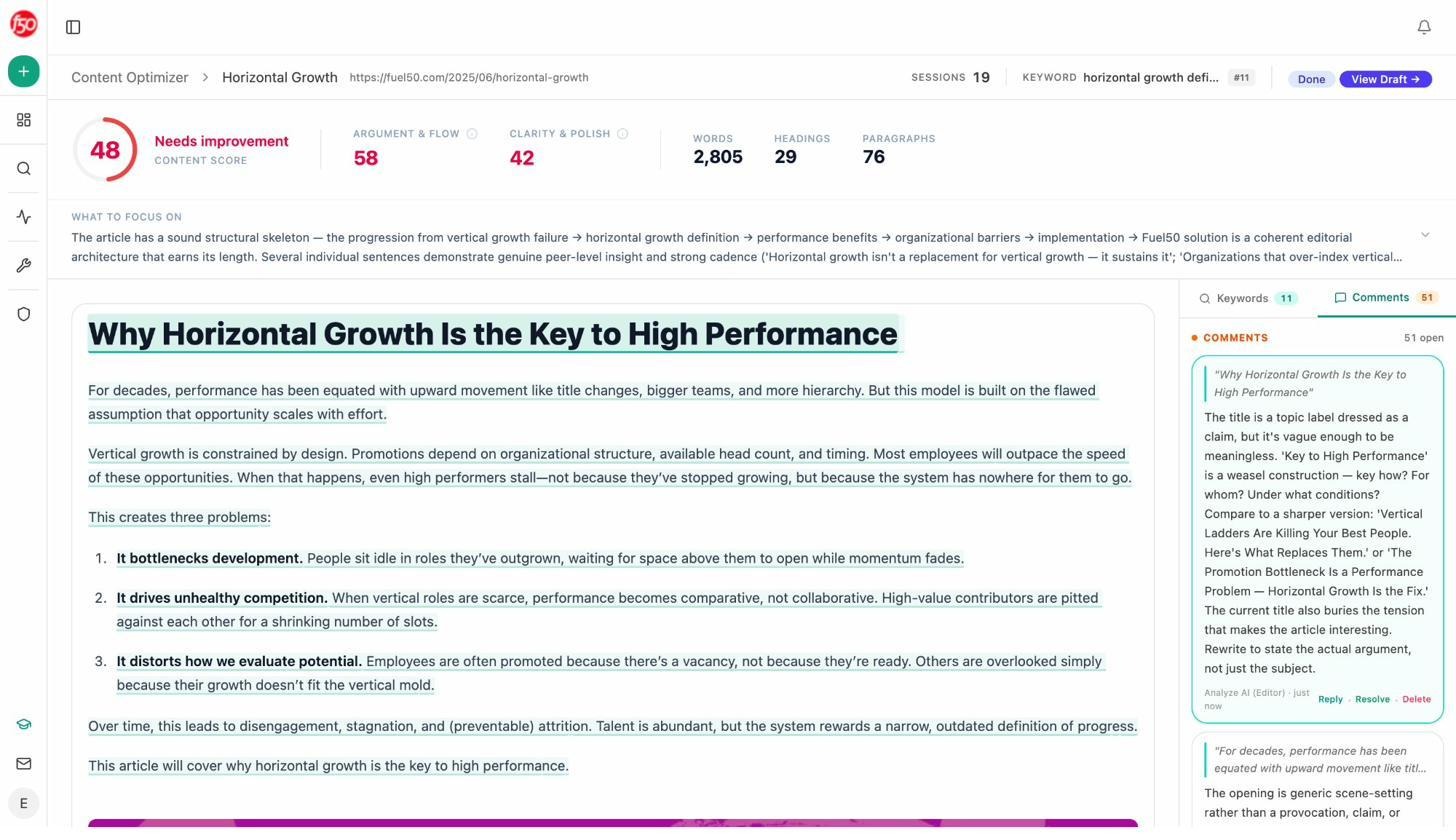
The output is a draft that scores higher on both readability and AI Engine Optimization signals.
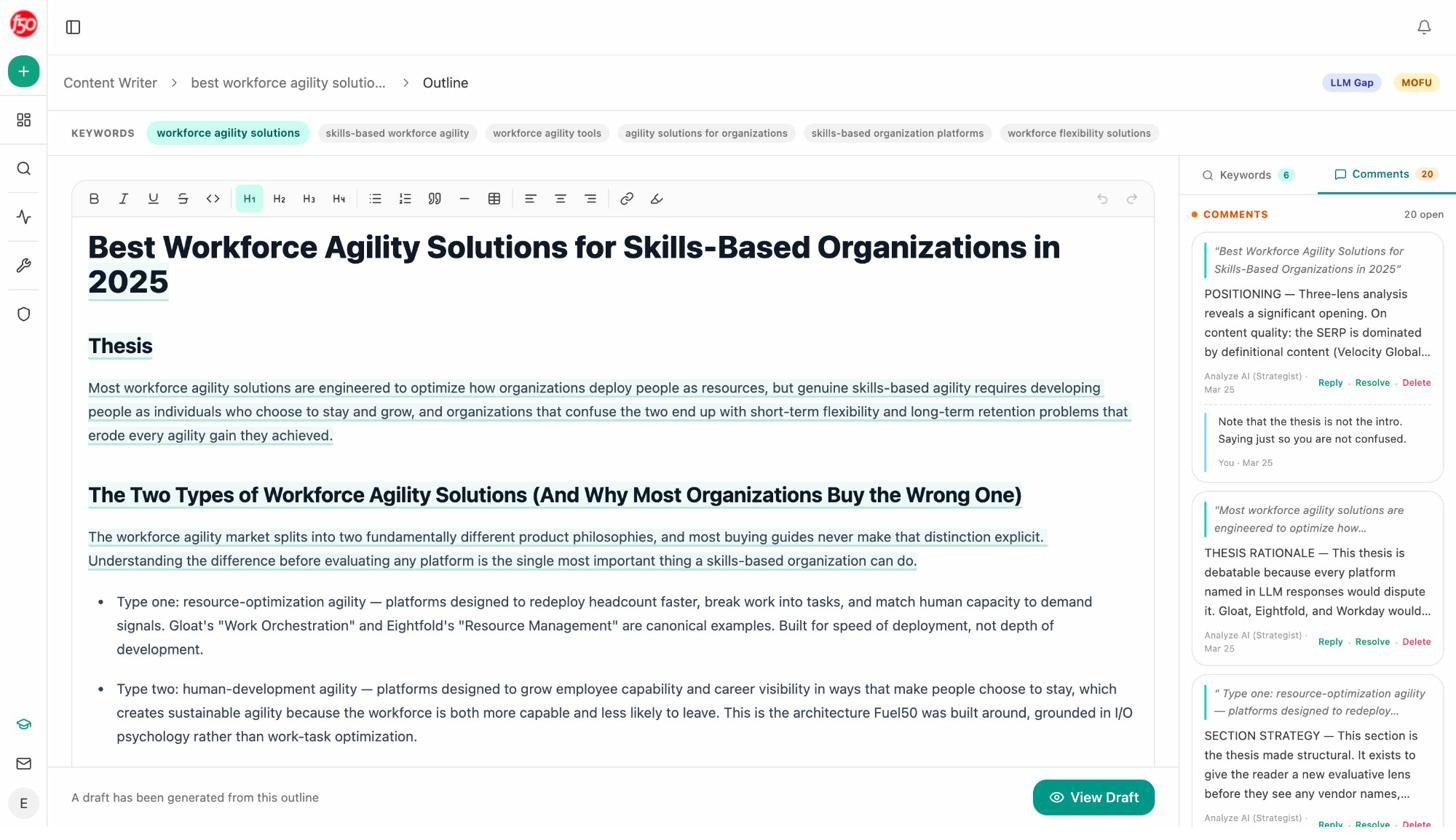
Content Writer handles the inverse. Bring an idea, a competitor URL, or a target prompt, and it runs the research, builds the outline, and drafts a piece against your brand vault. Each step is reviewable and editable, which is the part generic AI writers skip.
Competitive intelligence
Ahrefs Brand Radar (the $199/mo add-on) tracks brand mentions across ChatGPT, Perplexity, Gemini, and Google AI Overviews, clusters prompts into topics, and shows share-of-voice over time. Moz has no comparable feature. Its competitor view is limited to rank tracking inside Google SERPs.
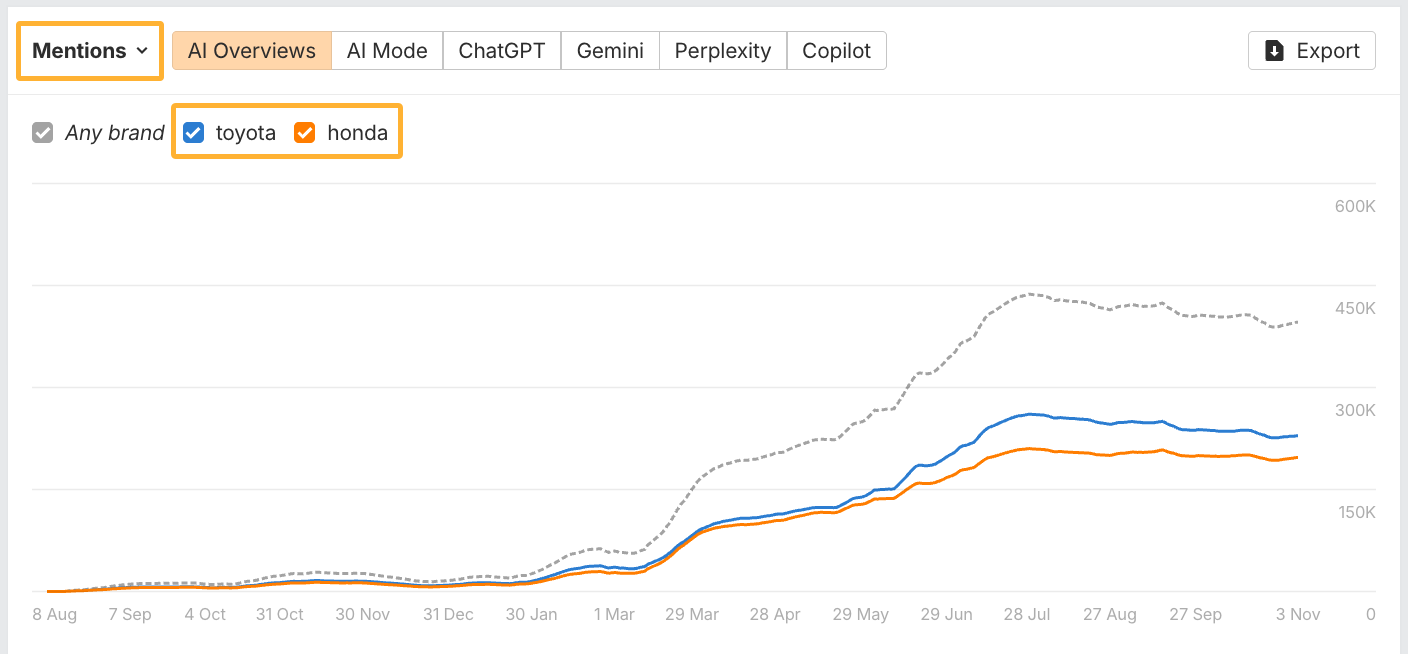
The honest critique of Brand Radar is dataset opacity. The “100 million prompts” claim is not broken out by sourcing, frequency, or representativeness, with extrapolated rather than observed query volumes.
Where Analyze AI lands
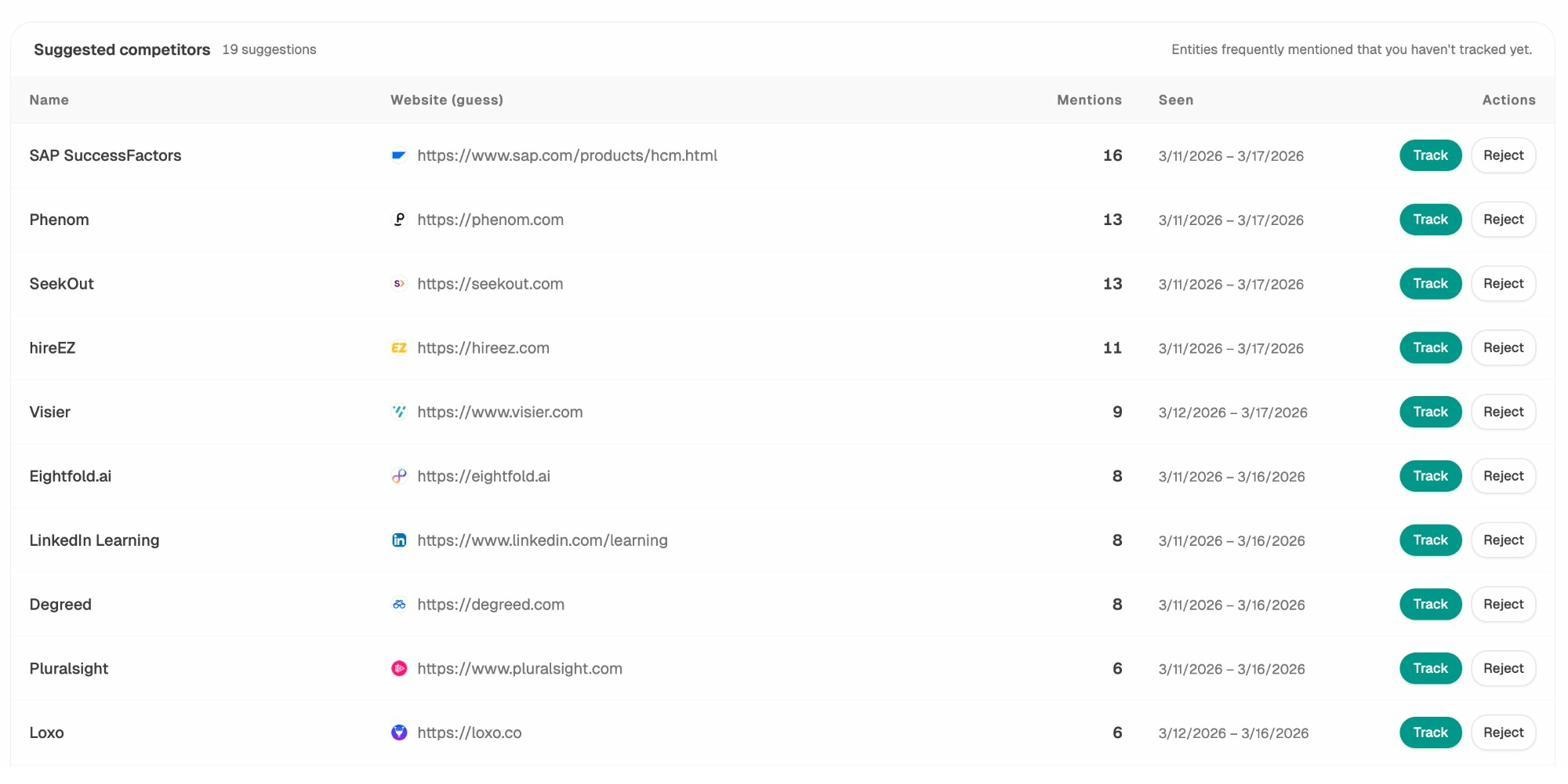
Competitor Intelligence auto-suggests competitors based on entities AI models cite alongside you, with one-click tracking.
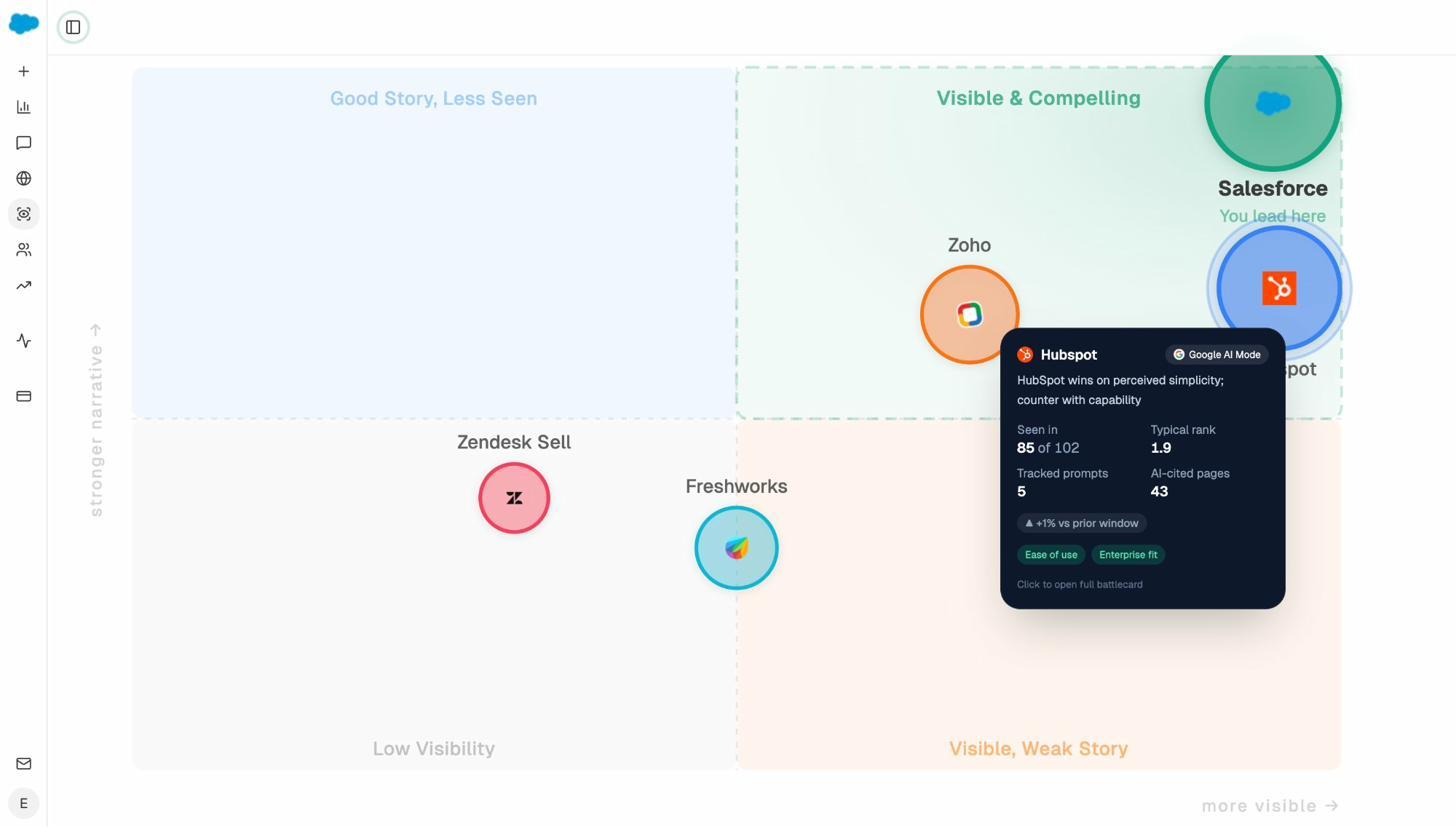
The Perception Map plots every tracked brand on a 2D quadrant of presence versus narrative strength using real visibility, rank, sentiment, and proof signals. It is the dashboard you put on the wall before a board meeting.
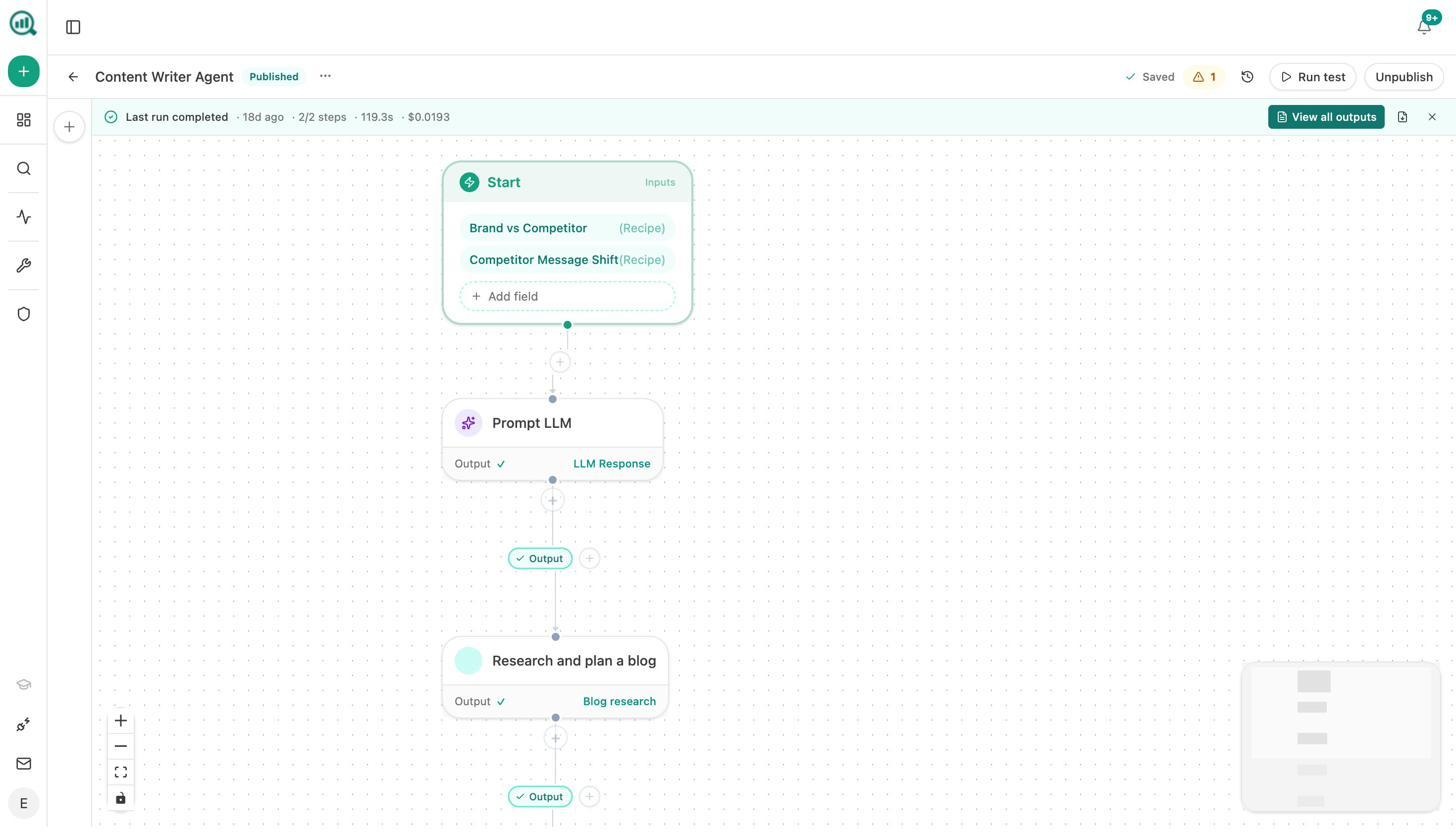
AI Battlecards ties the perception view to action, surfacing where each competitor wins, what language AI repeats about them, and what your counter-narrative should be. How to compare your AI visibility against competitors covers the workflow end to end.
The category Analyze AI is actually in
Up to this point the comparison reads like three tools doing similar work. That undersells the feature worth understanding before you decide.
Analyze AI is an agentic SEO and content platform. The dashboards are one surface. The other is a workflow engine with 180+ nodes, 34 pre-built data recipes, and 3 trigger modes that runs your operations layer continuously.
The data inside the nodes is what breaks the category. You get full read access to Google Search Console, GA4, DataForSEO (27 nodes including Brand Mentions, On-Page SEO, Lighthouse), Semrush (7 nodes including backlinks and organic keywords), HubSpot (26 nodes for the CRM surface), and a Brand Vault that injects tone, claims, and disallowed phrases into any agent. An Ahrefs MCP integration is also available, so the Ahrefs data you already pay for is one node away.
Two examples.
Weekly content refresh fleet. A scheduled agent pulls declining pages from GA4 every Monday, scrapes each one, runs them through the Content Optimizer, gates the output on an AEO scorecard, and pushes rewrites to WordPress as drafts ready for review.
Daily AI visibility regression alert. A check every morning pulls prompts where visibility dropped in the last 24 hours, drafts a counter-content brief for each, and posts to Slack. The “we found out two weeks late” problem stops existing.
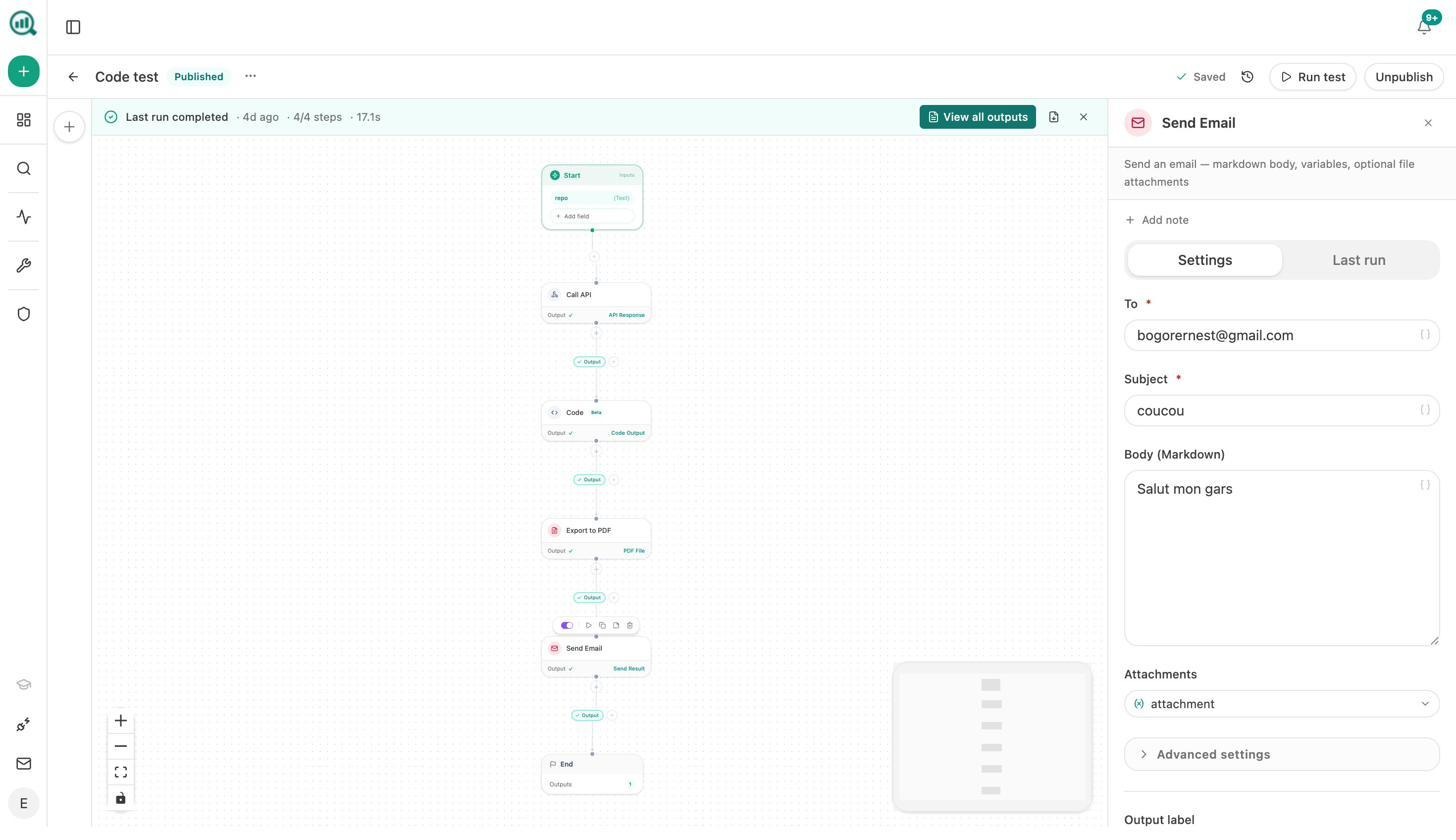
Ahrefs and Moz are dashboards. Analyze AI is a dashboard plus the substrate that runs the work the dashboard surfaces.
The 5-question decision framework
Answer each question. Tally the score. The winning total picks your tool.
1. How many sites or clients do you manage? - 1 to 2 → +1 Moz - 3 to 10 → +1 Ahrefs - 10+ → +2 Ahrefs
2. Which markets do you target? - US and Canada only → +1 Moz - US plus 1 to 2 English markets → even - Non-English or 3+ countries → +2 Ahrefs
3. How much do you rely on Domain Authority? - DA is required for client reports or outreach → +2 Moz - Either DA or DR works → even - Authority metrics don’t drive decisions → +1 Ahrefs
4. Are you tracking AI search visibility (ChatGPT, Perplexity, Gemini, Claude)? - Not yet, no plan to start → score Ahrefs vs Moz as above - Want it in the same place as SEO data → +3 Analyze AI
5. Do you need content workflows (briefs, drafts, optimization at scale)? - No, content runs separately → no change - Yes, I want it integrated → +2 Analyze AI
If Analyze AI scores 3 or higher, that is your primary platform. The higher of the Ahrefs and Moz scores wins the rest.
The realistic stack
Teams doing this work seriously end up with two tools, not three or one. Two stacks make sense in 2026.
Stack A: Ahrefs + Analyze AI. Ahrefs for deep keyword and backlink data. Analyze AI for AI search visibility, content workflows, and the agent layer that joins both. About $258/mo annual on the lower end. Right for agencies and in-house teams doing serious link work.
Stack B: Moz + Analyze AI. Moz for DA, local SEO, and a beginner-friendly site audit. Analyze AI for the AI search and content layer. About $178/mo annual on the lower end. Right for content-led teams that do not live in the link graph daily.
For solo founders on one site, Analyze AI Growth at $99/mo plus the free SEO tools (website traffic checker, SERP checker, keyword rank checker) often covers the work until growth justifies a second subscription.
Spend the budget where the work is going
Pick the tool that maps to the work in front of you this quarter.
If you run one site in English markets and need a friendly platform with DA reporting, pay Moz $79/mo annual and skip the rest. If you run an agency, do international SEO, or your link work demands deep data, pay Ahrefs Lite or Standard and accept the credit system. If the part of your job that is now growing is AI search visibility, content production, and automation, start with Analyze AI and layer the backlink tool that fits.
The right tool gets faster as you use it. The wrong one is a $1,200-a-year tax on attention you cannot afford.

Ernest

Ibrahim


